main banner
MSAA Archery Articles
photo


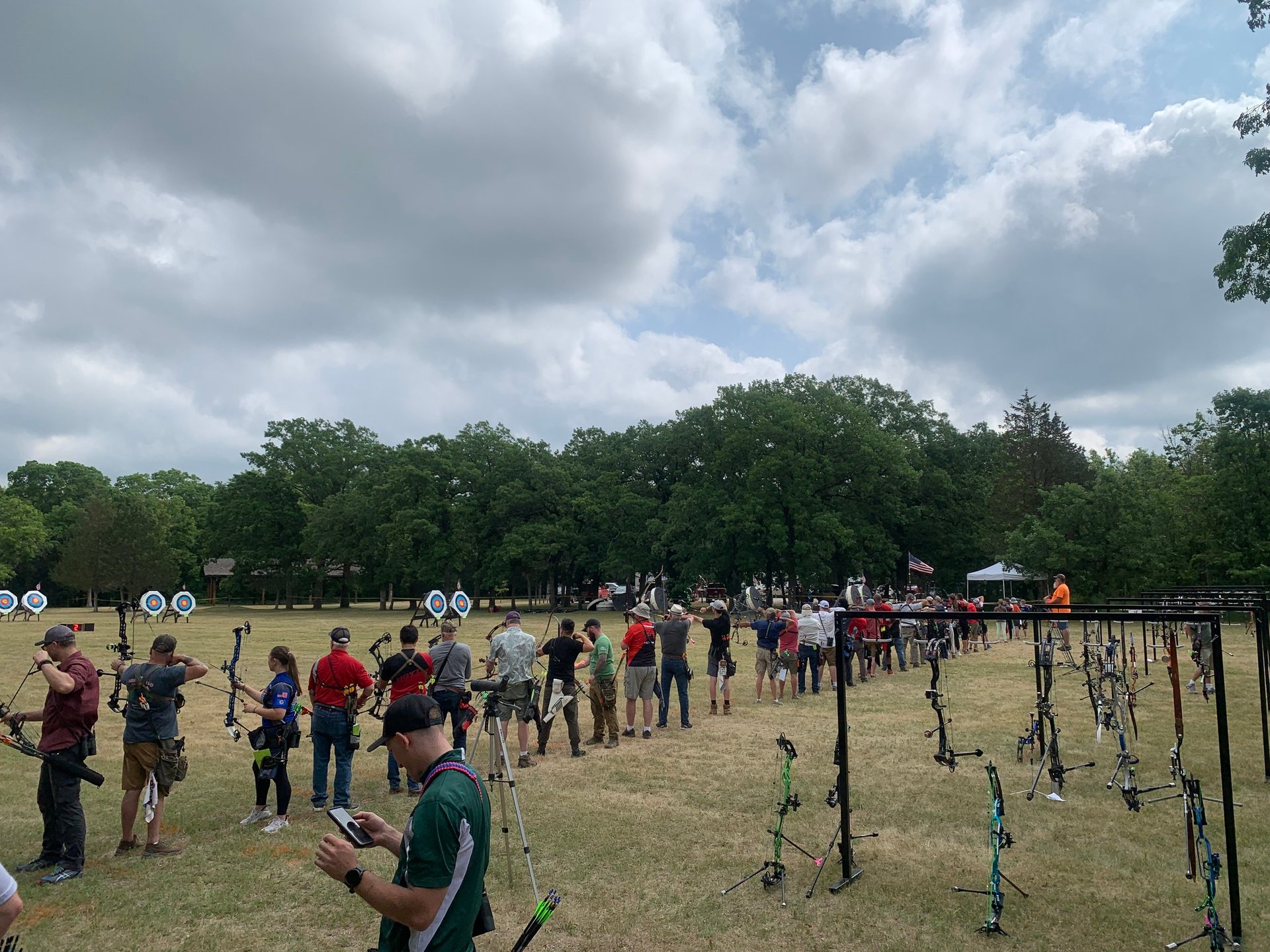
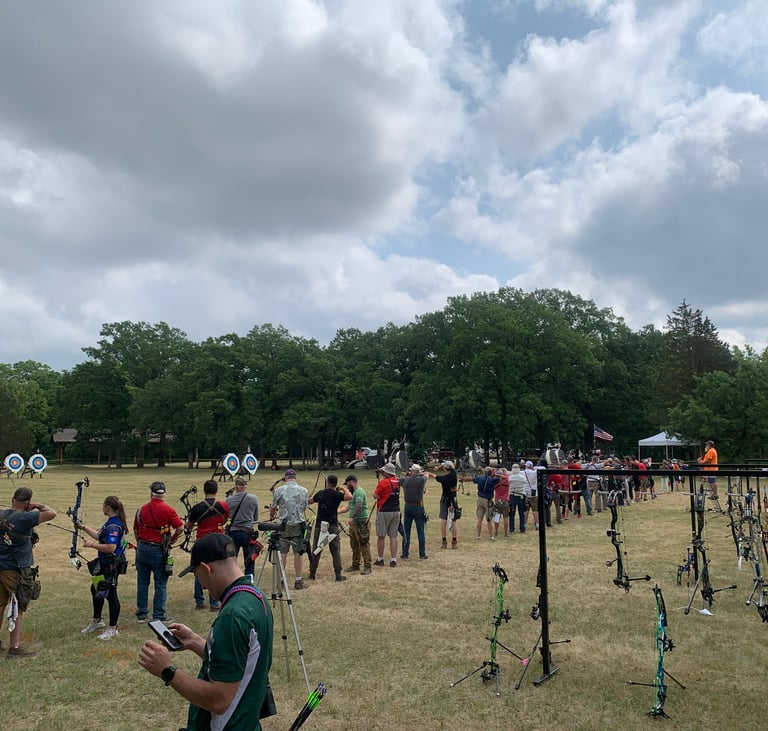
Know About Shooting Line Etiquette

For those that are new to tournament archery and for those old yet in need of reminding it is a good thing to go over Shooting Line Etiquette and how we should behave while competing against others. In most games that involve a community of people rules and norms are needed that help the game proceed smoothly and to the benefit of everyone. In tournament archery there is a set of rules that dictate how we ought to manage ourselves on and around the shooting line. Depending upon the formality of a particular tournament the rules may run from lax to rigid, and it is best if you recognize the different situations. What I will discuss here are the rules and norms that relate to MSAA events mainly, but  can be related to most archery tournaments in general. 

When arriving at an archery tournament the best advice is to get there early and prepare, not only for yourself but to get your gear in place and put away so that you do not disturb others near the start of shooting. No one can blame those who get there a moment before due to traffic or something unforeseen, but it is a struggle to get ready under such circumstances and a diversion to those whose thoughts are on competing. It is best to get your gear on the rack as soon as you can and take the reminder of the time to either visit or mentally prepare. 

Listen carefully when the tournament official goes over the rules. He or she will explain not only what the general rules are but will also define for you what the line signals are going to be. The line signals are very important and are really the focus of this article. 

There may be some variance in line signals and that is what you have to listen for when tournament instructions are being given. Generally it goes something like the this. The first signal brings the A line up - those when indoors who have their targets on the bottom of the bale and those when outdoors who have agreed to shoot first. Now the first signal is just that, a signal to bring those shooters up to the line - but it is not a signal to then start shooting. The signal to start shooting is the next one after the signal to come to the line. These signals might be oral signals or they might be sounded with a horn or whistle. For instance, orally the first signal to the A line would be "line up!" and the signal to begin shooting would be just that - "begin shooting!". If a whistle or horn were being used the A line up signal might be a single blast and then the signal to start shooting might be two blasts. The important point here is to not start shooting after you have heard the A line up signal and to wait until you hear the begin shooting signal. If you shoot after only hearing the line up command you may forfeit those arrows or may have to march down and pull what you have shot while everyone watches and gets to know you a little better!

As I have said, once the begin shooting signal has been given you can start shooting, and can continue to shoot until done shooting the allotted number of arrows or time allowed has expired. Once the tournament official recognizes that everyone is finished shooting, or that the allotted shooting time has expired, he or she will signal the B line up either orally or with a horn or a whistle. Again, as with the A line, these folks are not to shoot until they hear the next signal to begin shooting. Once the B line has finished shooting the clear signal is given which indicates that the shooting end is finished and shooters may now move to score their arrows. Orally this might be "all clear" or with a horn or whistle might be three blasts. 

Another important aspect of line etiquette is how to step into or out of the line when others are actively shooting. Let us say for instance that you finish shooting early and would like to step away (this is allowed) but don't want to disturb others in doing so. It is always good manners to never step away while the shooter on either side of you is at full draw and is focusing on the target - this is simply not done and if you see anyone doing this please gently remind them not to. Likewise, in a less formal shooting situation (where shooters are not brought to the line together to begin with) you must not step into a line where the shooter on either side is shooting. Basically stated do not step in or out of a line when the shooter on either side of you is at full draw. 

Is there a best time to step in or out of a line when others around you are shooting? Absolutely! The very best time in my opinion is right after the shooters on either side have shot the arrow that you have been waiting on before stepping in or out.

Here is my logic. Timing your entrance or departure right after an arrow is shot is the best time because mentally speaking the shooting event for the shooters around you are over and they have yet to prepare mentally for the next. What I mean here is that for many that shoot tournament archery there is a mental program or sequence that they go through in their minds to get ready for their next shot. In their minds they might be running through a list that involves form, aiming, and release. Your stepping in or out during this sequence ought not rattle these shooters, and your doing so is completely legitimate and acceptable, but for the sake of knowing the best time it is food for thought. 

In all other things it is important to remember that you are closed in tight with many other shooters while you all are competing. Do not be chatty, and do not rant when you personally shoot a poor shot. Sometimes it is hard not to remark or complain out loud when on the line and things are going badly. It is important that you learn though how to make a shake of the head enough and to then just move on, not only for those around but for yourself to help get back into the game.

T. Rose

Top


Shooting at Outdoor Target Tournaments

Next to hunting shooting my bow outdoors is my favorite archery activity. There is something very satisfying about shooting arrows over a long distance into a multi-colored target. For folks like me the MSAA offers a complete outdoor target tournament calendar featuring the State Target (900 Round), State Field, and State FITA tournaments. Of course there is a knack to shooting these shoots, and much that we all can do to prepare.

Here is what I have learned over the several years that I have shot these events: 

Get your bow set up early. Shooting outdoors brings its own challenges, there is the weather, and there is the weather. It might be raining, windy, or sweltering. You have got to be ready. Typically a bow set up for outdoors shooting will have more poundage set than less and will be shooting slender arrows with very small vanes. 

Put as much poundage on as you are comfortable with, doing this will flatten the trajectory of the arrow. A flat trajectory means that a small mistake might not take you out of the gold (center of the target). Moving the poundage up also might mean the difference in arrow clearance under the scope or pin. If your poundage is too low you might not have enough clearance as you bring the sight down for the longest shots – this is especially a concern for FITA shooting where the longest shot is 90 meters (~98.5 yards). 

Get a good set of slender carbon arrows. I use ACC 3-28’s, although there are many others nowadays to choose from. On those arrows put the smallest vane possible, I use 1.5 inch, but you can go even smaller. With a good slender arrow and a small vane the wind will have a smaller effect on arrow flight. Make sure that the vanes are secure to the shafts. Make sure that all of your nocks are in perfect condition, and if any are dinged replace them. You might think that this is a finer point, but I can attest to the fact that a dinged nock will cause inaccuracies – especially at the longer distances. Make sure your arrow points are secure. I was shooting the best FITA of my life and mysteriously sent the first arrow of the last end at 70 meters over the top of the butt. Turns out I forgot to look at my arrow points after the end before and one point was missing. I not only dropped the points for the missed arrow but dropped several more while mentally trying to recover from the mysterious and unexpected miss. 

Bring extra arrows. A couple of year’s back I was placed on a butt with a couple of other very good shots. We spent the afternoon dinging each other’s arrows and at the end of the day I had 3 dead ACC’s on the ground and several nocks shot off. 

As always make sure your string and harness are in good condition, and if you have got a D-loop make sure it is tuned with the string and peep, so that the peep comes around without repeated adjustment (if you are not using a device to position it with). Shooting outdoors is an iron man competition. Not only must you maintain your focus but also you must do so for 4 or 5 hours. If you have to fiddle with your bow before every shot the mental impact after 60 or 70 arrows will start to show. Get the peep set so it turns out right on; get that D-loop set so that you don’t have to fiddle with it a bunch. 

As always, make sure that everything is tight. In the rain, wind, and heat things will change, make sure that you have got a good start by getting everything snug. 

Shoot a lot. Shoot to get the kinks of your setup worked out. It usually takes me several days to get things just right. Shoot to build strength and endurance. At a 900 Round 102 arrows get shot, take into consideration a few letdowns and you have got a long day of tense muscles. Build your strength, so that in the end you can take complete advantage of the closer distances because your stamina will get you there. Shoot in all kinds of weather – especially in the wind. Personally, the wind un-nerves me, does it you? It is tough to hold on and on a windy day back tension becomes more of a curse than a savior. Practice in the wind. 

Number your arrows and shoot all of them in practice. Number them in such a way that you will not necessarily catch a glimpse of the number while loading or shooting each one. I number mine on the opposite side of the cock feather, away from my face. Not knowing the number of an arrow before you shoot it will help you more subjectively evaluate the arrow. Find those arrows that are not grouping and repair them or give them to your kids. A lot of times if an arrow is straight it is the nock that is either damaged or simply will not tune, or it is the vanes with a re-fletch as the answer. Sometimes you can tune the arrow by turning the nock some fraction of a turn. At any rate, do the work required to get your arrows to group. 

Shoot at every distance that you are going to be competing at. Don’t think that since you are having the most trouble at 60 yards that you can just set your focus there and then expect the other distances to be ready on tournament day. Practice each distance just about the same and then the attitude that you will encounter at each on tournament day will not be a complete surprise. 

Remember to approach your practice with a goal in mind. Work on form and not aiming, or the other way around. Maybe shoot a round and keep score, or maybe just work on conditioning and execution. Shoot in relation to the tournament date as it approaches. If the tournament is still some distance off maybe you should be working on the elements and not so much on aiming. If the tournament is coming around shoot for score and work on your aiming. Work on your shot sequence – what are the reminders that you are using to get your form set up before you start aiming? For me it is draw with back tension, low shoulder, and relaxed arms and shoulders – then it is aim, aim, aim. Work on little reminders that will help you out of a slump, or a bad shot. Talk to yourself in practice and bank away those ideas that will help boost your confidence. 

Work on the tournament tension that you expect to encounter and learn to use it to your advantage. As you are getting close to the day end your sessions on a high note, and don’t end them in frustration. Most athletes rest the day, or even a couple of days, before competition. This rest helps them become more eager and ready for the tournament day. 

As with any tournament come prepared. Bring your tools, sun protection, a chair, and anything else you might think that you will need. One shooter that I know of would bring wipes to keep his hands clean. Avoid anything oily or greasy, and remember if you are planning on it for tournament day you had better have integrated it into your practice routine or at least have thought very carefully about what it is you are bringing or using. 

Drink lots of water and take time for a snack. Stay with mild foods. Think about your bathroom routine. There is nothing worse than the distraction caused by having to deal with nature in the middle of a Round. If there is anything that you can do to mitigate the effects of nature do so, and plan ahead, but remember, you have to stay hydrated. The effects of running dry are well documented and you will pay the price if you do not take a preventative approach to not drying out. 

On tournament day make sure that you listen while the rules are explained and question an official with any concerns before you start. Get your head on and stay loose before beginning to shoot. Once you start shooting try to developed a rhythm and stay with it. I am not suggesting that you force it, but get settled into a rate of shooting that is regular from arrow to arrow. It has been well documented that shooting with a rhythm results in higher scores. 

Also, take a look at the article posted here on shooting the State Indoor. It has got some good advice on what your attitude should be while shooting and how to handle distractions. 

Good luck and I will see you outdoors! 

T. Rose   

Top


Try It with Back Tension

When I learned how to release an arrow using back tension my personal enjoyment from the sport of archery increased not only because I shot better, but because I also shot more naturally. Back tension releasing simplifies the shot process by minimizing the mental struggle between holding, aiming, and triggering the release. Through muscle memorization the back tension process is imprinted and when then done correctly requires only that the shooter focus on aiming. Focusing on one thing at any one time is the best of all possible worlds. I firmly believe that if you are not already shooting your bow using back tension you are missing out on what may be the number one form factor that will make you a better shot.

You do not need to be an expert to learn and use back tension. You do need to be ready to relearn and go through some initial awkwardness that any new form element brings. If you stick with it the reward will be great – and that is a promise!

Back tension is a simple method that will help you to minimize arrow release anticipation and will ultimately make your best shots a complete surprise when released. Back Tension is also a great way to combat and keep away target panic that is associated with release anticipation. The whole point of back tension is to release the arrow without anticipation and without the interference of the muscle groups nearest those points that interact with the bow. The key to using back tension is to release the arrow unconsciously while you are consciously aiming.  

An important step to take before going about the mastering of back tension is the setting of your bow to the proper draw length. This can be roughed in by the shop but the fine tuning of the draw length is up to you and really must be done to get the most out of back tension. The idea is that the muscles in the center of your back really do not have much of a contraction range and will not go far either way. If your draw is too long you will be stretched out and will have no room to contract the muscles further, if you are too short your form will be scrunched up. 

Try this: using proper form (low shoulder, consistent grip, consistent anchor) draw the bow back and find the spot where you can rock the muscles between your shoulder blades (whether you are back to full draw or not). If you are not in that muscle rocking window you need to get there by twisting (or untwisting) your bow's string or changing out the cams. I adjust so that I am forward of the rocking point I mentioned and can tell when I'm too short because my front shoulder feels very awkward (I might be 4 or 5 twists of the string beyond the awkward feeling point). When adjusted just so I get a firmly locked in feeling front and back and shoot much better than when otherwise not in proper draw adjustment.

Any release can be shot using back tension. I learned back tension using a hand held trigger release (not a very good one either). In my basement I set up a 12-yard range and started shooting. Since I was not working on aiming, and understood the importance of working on only one form element at a time (back tension) I did not put a target on the butt and was not concerned with where the arrows themselves were hitting (as long as they did not bounce off the concrete wall next to the bag!). When I drew the bow I focused on the muscles in the middle of my back and loaded them with the tension related to the holding of the bow weight. Once at full draw I completely let go of the tension in my hands, arms, and shoulders, and as a result my back muscles had everything on them. This relaxation naturally causes the further contraction of the back muscles, which is key – relax those muscles! This relaxation is a very important step. If the hands, arms, and shoulders are not relaxed it is that much harder to transmit the effect of the contraction of the back muscles to set the release off. Then focusing on a continuous push-pull action my release hand would rotate to the point that it interfered with my thumb (or hand) and then set my release off - a complete surprise! The push-pull action is the pushing of the bow handle forward and pulling of the release hand back – both done consistently and smoothly. 

I have also explained back tension with this analogy - if there were a point to tearing a reasonably thin piece of plywood down the middle (if a sensible way to grip it were provided) how would you do this? Certainly the hands simply do not have the strength, nor do the forearms. Perhaps some folks might manage it using their upper arms but most would probably have to get the muscles of the back and shoulders involved. Gripping the plywood and pulling it apart down the middle (using opposing forces) is a good way to think of using back tension with a bow.

I repeated as explained above consciously over several days and weeks until I felt like it was programmed into my muscle memory, only then did I put up a target face and started to practice aiming. 

An important point here is that the trigger, or release actuation, is not set off by the fingers, or muscles anywhere near the release itself. The arrow release is triggered by the rotation of the hand (especially a hook release) or the interference (especially a trigger release) that the back muscles cause as they move the limbs into position. The result ought to be a complete surprise, if it is not than back tension is not being done correctly (or at least to its optimum). The surprise comes in because all of the fine motor muscles of the hand are not sensing the release as they would when you mentally decide to trip the trigger (not using back tension), instead all of the work is being done by muscle groups far removed. Your best shots are going to be the ones that shock you with their degree of surprise, and you will become a back tension master when each shot is a complete surprise and you learn to let that surprise be a good thing.

For some folks not knowing when the arrow is going to go off is just too much to handle, and no matter how hard they try, or how much they understand, back tension is simply not an option for them. The surprise of the release can be unsettling unless you've mastered the act enough that it is programmed not to be so. I often manage back tension somewhere in between complete surprise and complete anticipation. I do this especially when I am not practicing as much as I should be. What happens is that I know just about when the arrow is going to go off and when it does not I get anxious and consciously either pull through or let down. Clearly consciously pulling through is a bad thing, my head should be on aiming and not on releasing when I am staring down the spot, and excessive letting down brings on fatigue because a let down arrow is essentially a shot arrow. Point is that my head is into it and it should not be. Back tension is all about trust and confidence, and both come only with practice. 

Once mastered back tension should not get in your way when you have run through your pre-shot sequence, have drawn the bow back, and are aiming. Back tension should be programmed to the extent that the mind should not wander to the release, bow hand, or any other aspect while aiming, and should remain firmly placed on the target. 

You can recognize when someone is doing a decent job of using back tension, upon release their bow will jump forward and their release hand will naturally fall back - both of these actions in relation to how the back muscles were loaded with the tension of the bow. Nearer to butt 1 on the tournament line you will see a lot of this going on.

Now, back tension is not a panacea, or an answer for everything, and without the other form elements worked out (open stance, consistent grip, low shoulder, consistent anchor, etc.) it will not make as big a difference that it otherwise would. That is why it is so important to work on all the elements in their own time, bringing all together in the end when it comes time to just practice aiming.

Another aspect of back tension that makes sense to me is the idea of using opposing forces to shoot the bow versus the idea that you hold the bow up and pull the trigger. From a physical standpoint it is obvious why opposing forces aids in stability versus the use of a single muscle group positioned on one side of the body to hold the bow up. Spread the load and minimize the tension in all aspects.

T. Rose  

Top


Back Tension explained by George Ryals IV

What really is back tension?

Many shooters are mystified with the notion of “back tension.” For many shooters it is this mysterious feeling you get in your back when your shoulder blades are rotated, tucked, pulled, and squeezed into just the right contorted position that enables the elusive “perfect shot”. For others it requires a medical degree and a body chart to locate ambiguous muscle groups that must be flexed and pinched at just the right interval while poking at your release trigger. Ultimately, it is a confusing distraction that takes our mind off aiming, and aiming is the grand wizard of tasks that must be completed without distraction to complete the perfect shot.

All kidding aside, “back tension” can be simplified as a dynamic tension that is set up at the beginning of the draw and it is continues through the release of the arrow. I feel that it is second only to aiming as the key fundamental part of shooting form that generates accuracy and consistency. Proper setup and use of this tension can help you shoot longer by relieving fatigue. It will make you a more stable shooter by relieving muscle tension in the arms and hands. Dynamic tension also reduces the amount of muscle groups involved in the shot. This will diminish muscle tremors that can cause sudden misses, quick shots, and general unsteadiness.

What does it feel like?

Try this exercise. Make a bow drawing motion (without a bow in your hands). For most people it is easier to isolate the back without the weight of the bow or the tension of the string. While making a drawing motion, make sure your hands, forearms, and shoulders are relaxed as they can be. Actually let your hands dangle loosely as you do this. Keep your back straight, head up and turned towards the target, and straighten your bow arm, but keep the elbow unlocked. As you reach full draw, you will be able to feel your back working to hold full draw. Keep your elbow high. The lower your elbow gets, the greater your chances become for your back transferring the pressure to your arms and hands. Loss of tension is usually unrecoverable without letting down and restarting the shot. Leaning back at full draw is also another common cause of tension loss. I had this problem and it is hard to fix because you can’t feel it. Stick a bow square or an arrow in your waistband and let it go down into your pant leg next to your leg. Usually an arrow works best because of its length. It will remind you to stay straight as it stops you from leaning as you draw. This feels weird, but it does help.

This is the critical juncture in the whole technique. If your hands and arms take over, you will increase your shot time and will lose stability. The longer you stay with the shot the more unstable you will become, almost guaranteeing a miss. You can test this feel just as you did above by going through the same motions except make your fists super tight. You will be able to feel a diminished amount of tension in your back and if you keep your hands balled tight enough, you can feel the shaking and muscle tremors caused by this loss of tension.

How do you shoot a bow with well placed tension?

Dynamic tension is a simple push pull technique. You need to feel a balance between the push and the pull. Imagine drawing a bungee cord and you are stretching it between your bow arm and your drawing hand. Dynamic tension or the push pull effect stretches the cord. Most pro shooters set up this dynamic tension when they raise the bow to the target. This stages the proper muscle groups. The muscles that you use to draw the bow are the very same muscles that you use to aim the bow, and the back muscles will give you the most stability. I feel that it is virtually impossible to reach your full potential as a shooter unless you draw in this manner because it is extremely difficult to draw the bow with one muscle group and then, at full draw, switch to the proper back muscle group. If you draw it with arm and hand power, you are doomed to aim it with arm power, which is incredibly unstable. As you reach full draw you should pull the bow into the stops and continue to apply mild pressure as you align your peep with the scope and the dot with the X. Once everything is centered and anchored in the center of the target, You will then commit to the shot and the release opens in time.

How do you shoot a release while using Dynamic Tension?

You have reached full draw and aligned the whole shebang up with the X. Now what do you do? Well the release better go off pretty soon or you will pull the wheels off of the bow. With a trigger style release, usually you will need a slightly stiffer trigger than you are used to. This will let you build strong tension with your finger on the trigger without risk of pre-fires. I allow my wrist muscles and the tendons in the back of my hand to slightly relax as I pull. This causes my hand to yield on the release. There is no real perceivable movement, but it is just enough to change the pressure on the trigger, and the shot is released. A rotational style release works in the same manner. When you commit to the shot and your tension builds allow your hand to soften or yield on the release and that is just enough to change the attitude of the release handle to make it fire.

Who do you know if it is right?

This is where the mystery is revealed. If your elbow is above the plane of your shoulder, you are pushing and pulling, and there is no undue tension in your hands or arms, you have to be doing it right. Your bow will feel easier to hold, and your sight will hold tighter on the dot. If you feel like you are working too hard you are probably not doing it right. You may be over pulling. If your shot will not go off, you have lost tension. Let down and reset.

Do not over complicate the feel just push and pull. Practice this on a blank bale until you get it down. Then practice it on a target at close distances until you can forget about it and allow it to naturally happen. Then move to your normal distances and go for it.

If you need a visual aid go to www.archeryhistory.com and click on “archers” at the top of the page is a video of Terry Ragsdale and Eric Hall in a shoot off in Australia 1985. Terry, in my opinion, is the model by which all form should be judged. In the video, he exhibits flawless form and perfect shot execution. Grab the 20meg file. It will take a while, but it is worth it.

George Ryals IV is a top professional archer and author

Used by permission

Top


Giving and Taking Archery Advice

There is nothing like the advice of a teacher to move a shooter along to the skill level where the shooter wants to be and there is nothing like the enthusiasm of a shooter to seek out a teacher that has the right advice. In archery it is not always possible to find the one teacher that can guide us along, it just seems like there is not enough of them, and/or, we just are not prepared to meet with them on their terms. 

Fortunately, we do have in our midst a community of accomplished archers who have attained a level of skill and proficiency that enables them to advise the rest of us on how to go about addressing the finer details of shooting a bow and arrow. The trick is to get this advice, test it for soundness, and put it to good use. 

There is a great deal of advice already available in print and on video that will take us a long way toward becoming better shooters. Still, there is nothing like having a trusted advisor standing next to us on the range explaining what comes next.  

Notice that I said, "trusted"? Before all things it is important to understand the motivations of the person that is giving advice. My personal feeling is that most people can be trusted with wanting to sincerely help, but not all can be expected to give advice on the finer details of shooting a bow despite their willingness to do so.  

We get a lot of information by way of casual contact, and some of its good and some of its bad - we have to consider what we hear in this context very carefully. Without carefully filtering what our sister's boyfriend just told us we can easily end up wasting valuable training time and money.  

We are fortunate in our archery community in that most of us know at least one person who has worked things out and has done a lot of the legwork involved in becoming a better archer. It is this person that we need to approach and ask pointedly to help us out - we, as aspiring archers, need to step up and ask that person to give some advice on how to move things along. 

At this point something needs to be said to those folks who are leading the way skill wise - be prepared to answer questions and be prepared to help! Understand that it is an honor to be asked and a privilege to get another shooter heading in the right direction. There is a ton of responsibility when you are the person who has worked it out and has elevated your game to a high level. Not only are you expected to do well shooting-wise but also it is understood that you are the local expert.  

Let's talk about how to give advice: 

1. Do not give advice if you are not prepared to take the idea you are presenting to its logical conclusion - do not explain back tension and then walk away without walking the shooter through it. If time does not allow a complete explanation say this, and if you are willing to volunteer a time when things can be completely gone over do so. 

2. Avoid making casual remarks without your making sure that they are clearly understood. What is apparent to you simply will not always be to other people, and your casual presentation of an important element without clarification will most likely cause confusion - no matter how simple the idea.   

3. Try to stick with the presentation of one element or idea at a time – until the shooter has that element understood. Make sure that the person that you are helping has the idea ingrained before you move onto another. This might involve your speaking on a single idea for an extended length of time - meaning that this week it might be back tension and next week it might be feet placement (or maybe back tension AGAIN!). Be prepared to stay with the theme despite the other flaws in a shooters’ game you might see and naturally want to fix. 

4. Understand the seriousness when you are asked a question. For many people it is tough to ask the top gun just how he/she is doing it. Realize that the person asking the question is not only asking for help but is also expressing a willingness to try whatever it is that you are about to propose they do - this is an important responsibility and should not be taken lightly.  

5. Recognize when an archer genuinely wants advice or simply wants sympathy. Just because an individual is shooting poorly and is frustrated by it does not mean that it is time to step in and give advice, despite the poor performer looking towards you. During times like these it is best to just give some encouragement and not ask pointed questions about form or attitude unless asked. 

6. Talk a little, demonstrate, and then let the person that you are trying to help try it out. Do not weigh things down by talk, talk, talk, get your idea across and get onto trying it out as quickly as possible. This will keep the interest high and will keep things moving along.

7. If your advising in a formal setting – teacher and student, it is a fair expectation of yours that the student will have taken what was taught during the last session, practiced it, and is able to demonstrate it. If a student is continually coming to a session not prepared it is time for both of you to move on. 

8. Most importantly think before you speak. 

For those who want to improve and need advice: 

1. Think about what is that you really want to know, and if you know nothing then ask where it is that you need to begin. Most archers have some elements worked out but not all. Think about the phrasing of your questions and make sure that you are clear with what it is that you are asking. 

2. Do not let your first instinct be to take casual advice seriously. The advice that you just happen to overhear or hear from shooters with no more experience than yourself should be taken with a grain of salt, and certainly not acted on until you have put it past someone who actually knows. 

3. Find one person and work with them on the elements. Avoid advice by committee, and try to get into a situation where you can meet with an individual and work through the ideas that they are presenting - in other words have one teacher at a time and let them take you as far along as they are able. 

4. Give your advisor some slack and understand that they are human just like you. If there is something that they have said that you do not understand keep asking until it is clear to you. The keep asking part is your responsibility because your advisor will shut up and let you shoot if he/she thinks that you have got the idea. 

5. Be prepared to pay for advice. There is nothing wrong with an elite archer charging you for the knowledge that they have worked very hard to attain. If you are in this situation and have a dedicated accredited teacher count yourself lucky and make the most of it. What to look for in this situation is a formalized training structure where you are meeting regularly with the teacher and you are getting individual instruction over a predetermined time frame.

6. Be prepared to relearn and to make adjustments to what you already think you know. You may think that you have an element perfected when in fact you are wrong. Be prepared to change and be prepared to feel awkward as you make the change. It will take time for an element to become ingrained before it will feel natural and will be naturally repeatable. 

7. Most importantly listen. 

Get some good advice and good shooting! 

T. Rose  

Top


Preparing to Shoot the MSAA Indoor 

The MSAA Indoor Tournament is the highlight of many Minnesota archers’ winter shooting season. The Indoor Round is the 300 60x count using the blue 5 or single spot target. 

By way of preparation there are a few things that a shooter can do to get ready and shoot at or above their average at the indoor tournament.  

  1. Check over your equipment – I have talked with professional archers who do a complete teardown and rebuild of their bows before each major archery event that they shoot. They look for things like bent axles, fraying strings, and lack of lubrication. When they rebuild they carefully set their cam timing (dual cam bows) and they snug up every bolt to its proper tension. Then they shoot the bow a bunch to get things settled in and ready.

Look over your arrows – are they straight? Are your vanes or feathers in good shape? If your using vanes have you considered switching to feathers because they are more forgiving if there is any contact with your bow rest. Speaking of rest contact have you carefully looked things over to eliminate it? 

Are all the screws on your sight secure? Is your glass snugly clutched in your scope housing? Are all the screws on your stabilizer tight? 

  1. Practice, practice, practice – what have you been doing for practice? I have read that most championship athletes practice 5-6 days a week. This might be much for you, but you have to ask yourself what do you want out of this? If your shooting/practicing 1-2 days a week you should be able to stay where you are skill-wise. If you want more you have to consider practicing more. If you are practicing 3-4 days a week or more, you are most likely seeing improvement.

What is your practice situation? Have you set something up in the basement yet? Getting to the club or shop is not always easy, and when you cannot make it regularly do not turn it into an excuse not to shoot. Set up a range in your basement as far out as there is space for and start shooting. What I typically do is put the kids to bed and then head down for a half or three-quarters of an hour of shooting. I have 12 yards and reward myself when I can shoot consistently inside-out on the 5-spot (all 5 arrows inside the x-ring) or when I can consistently take out the baby-spot on the Vegas target. I figure that if I can do that in the basement at 12 yards I should have no trouble at least cutting the x-ring at 20 yards. 

What are you doing when you are practicing? If you are just standing up there and flinging arrows you are doing it wrong. There is a lot to think about and almost all of it boils down to what kind of form you are using and how you are releasing the arrow. Focus on the basics: 

A.     Where are your feet?

B.     Is your stance slightly open?

C.    How are you griping the bow?

D.    Are you gripping the bow consistently from arrow to arrow?

E.     Is your anchor consistent?

F.     Are you drawing the bow back consistently?

G.    Are you using push-pull once at full draw?

H.     Are you using back tension to release the arrow?

I.       What are you thinking about after having gone through your shot sequence and are focusing on the spot?

J.      Are you focusing until the arrow hits the target?

K.     What is your follow-through doing?   

My point is that there is a bunch of things to be doing and there is probably much more that I left out that you will have to figure for yourself. Your execution has to be repeatable. Work on delivering each arrow to the target with the same form, execution, and attitude. In between shots remind yourself what your form, execution, and attitude should be. This is called the shot sequence. Do this before each shot and do not skip it thinking that you have got it all under control. Archery is almost completely a mental game and the winners in the end are those that were able to focus for 60 arrows and no more. Running through your shot sequence keeps your mind from running away elsewhere. I used to have a little list taped to my upper bow limb to remind me about what I was supposed to be thinking – try this until your got your own sequence memorized. 

How are you dealing with distractions? Odd things happen during a shoot – a bow falls over or someone’s release flies out of their hand while at full draw – we have all seen it happen. Do these things get to you? Work on dismissing the distractions as they occur. When something jolts you on the line – be it the perfume of the woman in front of you or the aftershave of the man behind – acknowledge that it is bugging you and then immediately resolve that you are okay with it. Do not shoot that next arrow until you have admitted that you were distracted and then had made it clear to yourself that the distraction really was no big deal after all – a kind of flushing of the system if you will. Then get back into your shot sequence by loading up the next arrow.         

  1. What is your attitude like? Are you ready to compete? Are you ready to attack, or do you feel like you will be defending this year? An attacker shoots every arrow on the offensive, not keeping count of those gone by and not looking ahead. A defender will defend his score by keeping track of what is left. Clearly you can see a problem with the later case when a shooter chooses to shoot to not drop an arrow while the attacker works to remain oblivious of the possibility, and to get every one of his arrows into the x-ring. Do not keep track of score, yours or anyone else’s. In fact, do not even look upon anyone else’s target while they are shooting – look at the ground, the wall, or your bow while your running your shot sequence in your head. 

How are you going to handle a bad shot? Will the tournament be over for you? Depending upon your skill level and competition it might be, but then again it might not. An archery round can be a long game and like all sporting activities a lot can change quickly. If you shoot a bad shot you need to treat it like a distraction – admit it, acknowledge it, and then move on. Work to not mutter anything, or make a fuss over it, doing this not only distracts others but also heightens the impact that the bad arrow is going to have on your mental picture going forward.  

  1. Are you bringing your children to shoot? If you are then you need to decide up front what your own needs are as a shooter on this occasion. If your child is young, he, or she, will need your devoted attention behind the line. I have watched fathers shoot while their children shoot somewhere down the line at the same time. They run back and forth devoted to their children but are a wreck when it is time for them to shoot their next end. I think that it is best that a parent makes a decision in favor of the child in this situation and devotes their attention completely to them. If your child is older then it might be the converse, it might be time to let them go and shoot their game, and then you can shoot yours.

  1. What will you need on the line on game day? Arrive early and get comfortable with the venue. Walk around and talk to folks and make yourself at home. Get your bow out and get it set up, and make sure the rest of your gear is ready. Get your beverage handy and maybe a snack too.

  1. How do you shoot your practice arrows? If you are shooting them to drill x’s you may want to reconsider. The practice ends are the time when you really want to get the feel for your shot and remind your muscles how the shot that you have been practicing feels. If you are solely intent on hitting the x during the practice ends you have got things backwards because you need to get the shot down first. Concentrate on the feel and a clean release. Do not take any of your practice arrows seriously and replace your target after the practice end.

  1. Do you keep your target repaired? As the shoot goes on keep repairing the holes in the target that are made by arrows that you feel are misses. What I mean is if you are drilling the X every time and then in the 4th end miss one, repair the missed arrow’s hole by lifting the target and pushing the target paper back in place. Make sure you leave the holes that you have made in the bulls-eye though. What you are doing is ensuring that you do not get drawn back into the missed arrow’s hole later. Our brains have a way of doing this despite our attempts to do otherwise – repair those missed arrow holes!

  1. How do you feel after the shoot? Be objective and remember it may be your day today or it may be someone else’s. Sometimes all the practice and preparation in the world just does not cut it and the fact that you woke up on the other side of the bed was enough to doom your efforts. If you do well savor it and brag to your buddies, and remember how you felt and what you did to make that day a shooting success.

Good luck and come up and say hello at the MSAA Indoor! 

T. Rose   

Top


Is that really a target?

I recently had a bout with over aiming that took me a month to cure. I cured this horrid condition with one simple thought - 'blank bail'

Over the past several years I have worked on the mechanical form elements that go into shooting the bow, you know, the things we all hear about like front shoulder down, back arm at shoulder height, and 'watch how you are gripping it'. Lately I've made the admission that I'm satisfied with my form and want to work strictly on aiming. I understand that some people never take the leap where they are saying to themselves that their form is complete and it is time to work on just aiming. These shooters are still thinking (at some level) about their form execution even on the tournament line - and the surprising thing is that this works for quite a few of the shooters like this. I also know people who aim, aim, aim and tear through the shot. Seems to me that these kinds of shooters have the ultimate confidence in their back tension execution and tend to become the best shooters amongst us. 

The other day I realized that for myself the aim, aim, aim approach is simply too un-nerving. I found myself fighting to hold and tensing up when I drifted. Not being relaxed when shooting a bow causes many bad things to happen, sometimes seemingly unexplainable things, but the end result is always the same - low scores and frustration. What got me jumping the other night and has me a little pumped (only another archer would understand this) is that the target is simply not the issue, and is forever a blank bail. To my new way of thinking this is because it is the releasing of the arrow that gives up the real joy of target shooting. To me there is nothing more satisfying than a simple and clean release, a release that is relaxed and that is a surprise. Where the arrow goes is not the point - how it felt when it left to go there is.

Great thing about this is that one does come before the other (no chicken and the egg controversy here) and so therefore the first does serve up the second. If you are enjoying the shoot, the release, and the day, your arrows are hitting the target right where you want them to.

I also think and want to caution that some competitive tension is required to shoot well. This competitive tension in my opinion keeps a shooter focused over the long haul of a shoot and helps to keep the dot a little closer to the middle. So the next time when you are on the line and feeling tense do not try to conquer it, use the tension to focus, add the tension to your arsenal. Chances are only a fraction of your competition has harnessed the tension and knows how to use it, join them and your scores will most likely improve. But the competitive tension doesn't excuse the fact that shooting the bow should be a relaxing endeavor and that before you score you have to actually shoot the arrow. 

T. Rose

Top


Getting Help from Archery Message Boards

Getting help on what ails you is sometimes not very easy but today in archery a wealth of information exists on-line at various archery message boards. An on-line message board is a great place to interact and to get just about any archery question that you might have answered. Besides getting help you are free to also dispense it and you may be surprised at the friends you make, and sometimes meet face to face, by getting started out on a message board system. 

Give it a try!

www.archerytalk.com

www.archerysite.net

www.archerynetwork.com


Top


Getting Kids Started in Archery

Recently an email questioner asked me how to get their child started in archery. I was at first surprised by the question, after having been so very involved in archery over the last few years I immediately thought that getting started with archery was as easy as tying your shoes. But of course it is not that easy and the questioner was asking a very good question and one that is relevant to those of us who want to see the sport of archery grow and prosper.

An important first step is to ask why get started in archery at all. That's an easy one to answer. Archery offers a combination of a love of the great outdoors, camaraderie, competition, and the never ending seduction of excellence in accuracy. Archery is both an outdoor and indoor sport, with hunting, outdoor target, and indoor target seasons. It is possible, if one so chooses, to shoot archery all year around. 

Hunting in itself offers the most tranquil and peaceful moments to be had because it insists that you spend hours a field not only hunting the game of your choosing but observing and learning the rhythms of nature. Hunting also brings as much excitement that one could expect to have in sport - that moment when all of the practice and concentration go into bagging your trophy animal.  

If not afield the typical archer might be found at an archery league or searching out an archery tournament to participate in. Our archery community is rich with shooting opportunities at various times during the year (things get pretty quiet during the archery hunting season though). You can choose from animal target, long range outdoor, and close range indoor tournaments to participate in.

Archery mentors are easy to find within the Minnesota archery community, and advice is always given freely. This said it is also apparent that the level of competition in the State is high and to get to this level rigorous practice is important and essential. The seduction of the tournament scene and in putting that arrow in the middle is great. Once you've shot that first arrow in the center knowing full well how you got it there you'll be hook!

Getting started in archery begins with a trip to your local professional archery shop. The staff at any of Minnesota's great shops have the knowledge to get you started and on track with a properly fitted bow and the use of correct form. The most important aspects of a bow purchase are cost and fit. See what's available in the price range that you want and then focus on getting the bow fitted. 

Fit is very important. The bow should feel good in the hand. A beginner should ask how to hold the bow properly - using a low wrist grip works best for many people, and might give the beginner the most repeatable results shot to shot (if you can master repeatability; shooting each shot with the same form, you have mastered archery). How does the bow feel with the grip that the shop salesperson has directed you to use? It's important to understand that bows are different and bows in the same price range differ from grip to grip.

Fitting the bow also means finding the correct draw length for the new shooter - this is very important. The draw length is the distance that the bow is drawn from rest back to the anchor point somewhere along the shooters jaw line. Make sure that the shop, after having set your grip and given the new shooter an idea of where to anchor, measures the draw length. The shop might do this with a bow that they have set up for this purpose. Once the draw length of the new shooter has been determined correctly the shop should be able to set the bow to the new length. This is very important. If the shop does not have a bow that will adjust to the new shooter's correct draw length don't buy the bow - wait until either the shop gets in a new bow of the correct type or buy from another shop. I learned this lesson the hard way.

There are attendant items that will complete the package. Depending upon the style of shooting that the new shooter is planning to participate in (shooting with or without sights; shooting with fingers or release; shooting compound bow or recurve) a sight, a release mechanism, and arrows will also be needed. For a beginner a sight should be basic and functional enough so that the moving up and down and in and out is not frustrating. A release should also be basic but must be comfortable in the new shooters hand - try several to see how they fit. Arrows must be fitted to the bow and here you'll rely upon the expertise of the shop. Arrows for a beginner should not be expensive, and you should expect to get a very good set of arrows for a reasonable amount of money. 

Archery form is everything and the shop should give some basic advice on this. The new archer should also look around for advice and might try one of the many resources in print and on-line. The new shooter should be concerned with how the bow is being held, the positioning of the draw arm, and learn how to use back tension to set off their arrow release. 

Beyond this it helps tremendously if the new shooter can get involved in a club or archery leagues. I know of at least one shop that even offers leagues for kids after school. Through these types of events the new shooter will learn more about what it takes to improve and to reach their own shooting potential.

www.kidbow.com

T. Rose

Top


Where Are Your feet?

Bernie Pellerite, author and NFAA Shooters School coach recently helped me with what he said in an article. Mr. Pellerite was discussing several aspects of form and one was the positioning of the feet while shooting. Mr. Pellerite clearly demonstrated for me why an open stance is the best way to minimize shoulder forward and back muscle tension. 

Try this: while standing lift your arms straight up from your side and hold them out as if you were holding your bow at shooting height. Vary the position of your arms moving them both forward and back and pay attention to the tensions that build in the shoulder muscles. I noticed that as I moved forward tension would develop in the front of the shoulder and when I moved my arms back tension would develop to the rear. Somewhere in between the extremes I noticed an area of minimal tension and this area was slightly forward of the rear extreme of where I could move my arm/shoulder to.

Reducing the tensions in the bow arms is key to staying on the road to archery steadiness and accuracy. By placing your feet so that your stance will be slightly open will reduce the stresses on the shoulder and will make you more accurate.

T. Rose

Top


It's All in the Form

I had read an article by the well known archery coach Terry Wunderle that has had a positive impact on my shooting as of late. Mr. Wunderle's was speaking on the use of good form and the importance of focusing on form during each shot sequence. 

For a long time I thought the road forward to archery shooting success was to first ingrain the form and then develop the mental aspects. I held some practice sessions working on form and the rest developing the mental concentration to aim. I was one of those guys who thought that once at full draw and settled in that form was then to be forgotten and to give myself over completely to aiming. Mr. Wunderle's article has changed that for me. He puts emphasis on focusing on form throughout the shot saying that most shots are missed because there was a mental break down in form and not because the pin wasn't on the target.

In my heart of hearts I had known this to be true even before I read the article, and I knew that I had to give myself over to focusing on form completely before I would improve much more at the sport. 

First in foremost in my opinion is that a shooter must spend the hours developing good form and timing. After he/she has gotten that done, and has developed the act into a very good and positive feeling, it is only a matter of duplicating that same form with every shot. Focusing on consistently good form from shot to shot is calming because the focus is off the itty-bitty target and is on a feeling that is positive when it is executed properly. This effect has actually steadied me up more than days spent on practicing aiming. Now it seems that the pin has a way of simply anchoring itself onto the spot, and when there is some movement more often than not the brain has a way of putting the arrow right where it is needed.

I think that there is a very important caveat that goes along with focusing on form in a tournament situation and that is you must have your form to the point that your focusing on it as a complete package. What I mean here is that in my experience focusing on form has to be taken all together and that the focus has to be on the good feeling that form when correctly executed brings. I have fallen apart at times by focusing on one element of form - the release hand, the bow hand, of the tension in the back. I hope that is understood - that by focusing on any one thing might mean trouble.

I know plenty of guys who still drill a hole into the spot with complete focus on aiming and are successful - no shoe fits all. But maybe some who are struggling to get ahead might give this a try. It might save you time, panic, and stress, and will put the fun back where it should be --------> in the act of simply releasing the arrow! T. Rose

Top

If you would like to share your tips send them to the MSAA Webmaster
adobe acrobat Contact the Minnesota State Archery Association 
MSAA is a registered trademark of the Minnesota State Archery Association.
Unauthorized use is prohibited
w3c cert